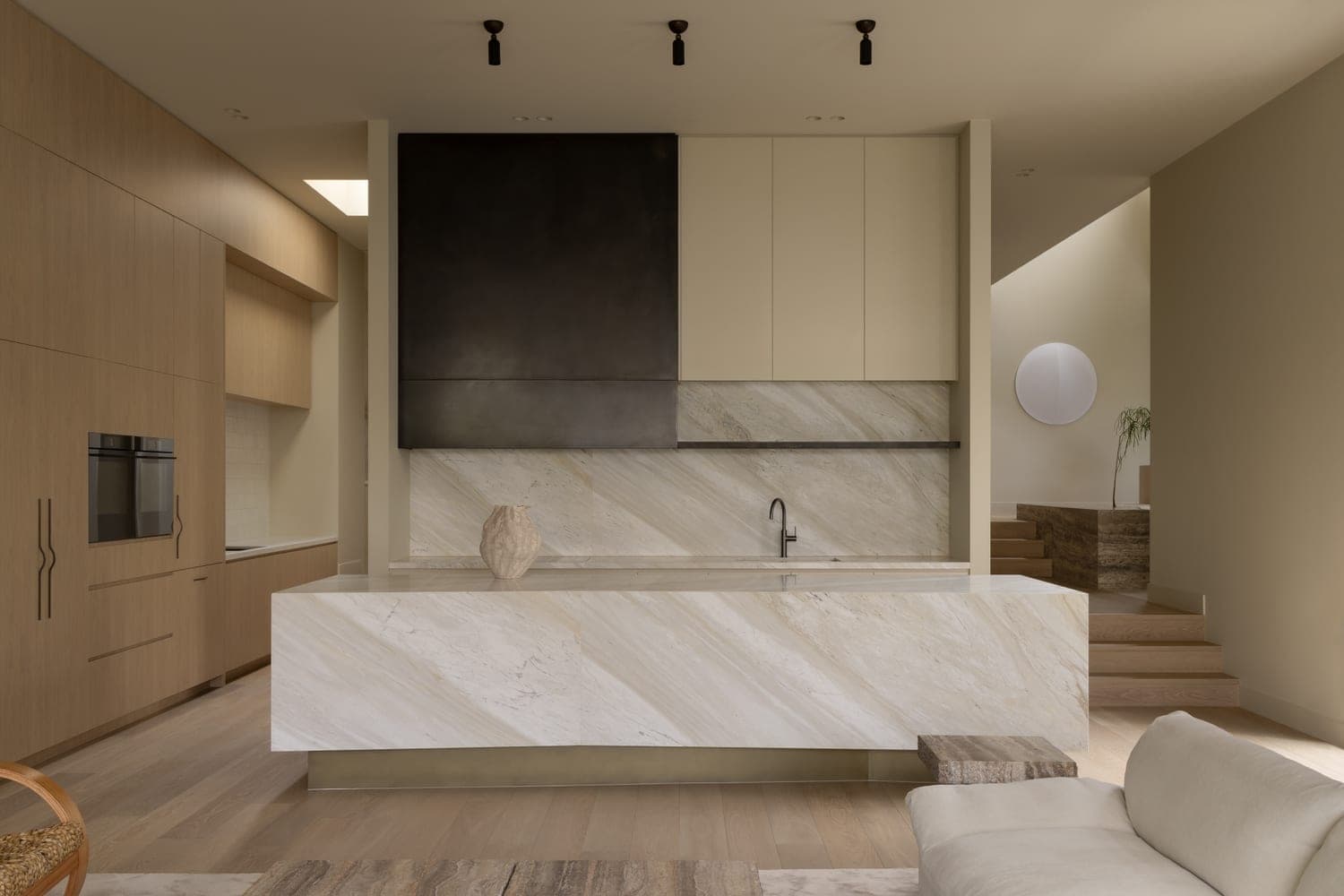
In Hawthorn, Camberwell, Kew and Canterbury the question comes up in almost every first conversation: keep the house and extend it, or clear the site and build new. There is no general answer. There is, however, a reliable set of questions, and working through them before engaging anyone usually makes the decision for you.
Can it be demolished?
Boroondara has more land under Heritage Overlay than almost any other municipality in Victoria. If your house is in a heritage precinct and graded as contributory, demolition will almost certainly be refused, and the project becomes a renovation that keeps the front rooms and the street façade and rebuilds behind them. That can be a very good outcome — many of the best houses in these suburbs are exactly this — but it should be known on day one, not discovered at the planning stage. A non-contributory house in an overlay, or a house with no overlay at all, can usually be removed. Established trees are protected separately under council's local law, and a large tree in the back garden shapes the plan whichever way you go.
What condition is it in?
Period houses in the inner east are generally well built, but footings, stumps, roof framing, brickwork and drainage all age. A renovation that keeps the original house has to bring it up to current standards for structure, energy and services, and the cost of doing that is the part owners most often underestimate. Where the front rooms are sound and worth keeping, a renovation makes sense. Where the original fabric is tired, a new house usually costs little more and delivers far more.
What do you want the house to be?
A renovation inherits a plan: the front rooms, the hallway, the ceiling heights and the orientation of the original house. The best renovations work with that inheritance, and the result has a character that a new house cannot have. A new house starts from the site — its orientation to the sun, its slope, its trees and its neighbours — and from a brief, and every room can be where it ought to be. If the house you have faces the wrong way, or its rooms are the wrong size for how you live, extending it will only go so far.
Cost, time and energy
Renovations are not necessarily cheaper. Working around an existing structure is slower and less predictable than building new, and a substantial renovation and extension in these suburbs can cost as much per square metre as a new house. It is usually quicker, because the planning process is simpler and the build shorter. A new house must meet the current seven-star energy standard and will perform accordingly; a renovated house is improved, but the original rooms rarely reach the same level.
Either way, the budget should be set before the design starts, and the design should be tested against it at each stage.
How we approach it
We design both, and we often prepare a short feasibility study before a client decides: the planning position of the site, the condition of the house, what each path could deliver and roughly what each would cost. It takes a few weeks and removes most of the guesswork. Recent projects in the area include Lynden in Camberwell and Rosedale in Glen Iris, both new homes, and a number of renovations that kept their Victorian and Edwardian fronts.